
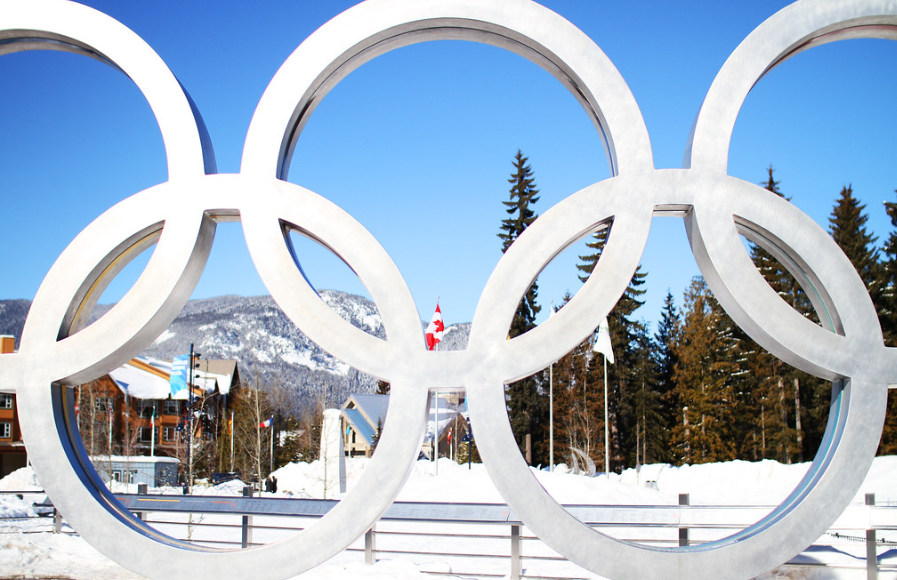
Imagine zooming down snow-covered slopes, dancing across smooth, pristine ice, soaring through the mountains, racing down an icy track, sailing across snowy hills.
Now imagine doing that with the hopes of winning a gold medal.
This is what athletes experienced this year at the Winter Olympics, which you may have been watching lately. In recent years, social media’s impact on the Olympics (both summer and winter) has increased. Let’s take a look at how.
First, let’s look at the positive impact. Social media allows athletes to connect with people and fans. Stephanie Wolff, an Olympics enthusiast, says, “social media … makes it easier for [the athletes] to connect with the public, and I think that’s a good thing, for the Olympics and for the athletes.” Social media gives athletes a good way to engage with their fans, which is another way for them to promote themselves and gain more followers.
This increase in followers can be very beneficial for them, as social media is also a good way for them to make money. According to Forbes, “more Olympians competed to gain followers on social media in hopes of creating a new source of income, especially with so many athletes barely getting by.” Social media helps athletes make more money (they are not paid for their participation in the Games), and it also helps athletes get more sponsorships and brand deals, another way for them to get income.
For example, rugby player Ilona Maher (from the United States) started posting videos on TikTok while she was competing in the Olympics and it helped her get sponsorships with the brands Secret, L’Oréal, and Sports Illustrated, according to Live Oak Communications.
Social media can also help get more people involved in the Olympics. Serafina Voigt-Vaill, another Olympics enthusiast, says, “I think the things I’ve seen on social media have helped me to follow the results of the Olympics and also to feel motivated to watch them.” Social media gets more people interested in the Olympics, helping to bring more attention to the Games and to the athletes.
There’s one more positive effect of social media that you may find surprising. While it may seem that, when it comes to mental health, social media couldn’t possibly be beneficial, there’s one example that proves otherwise. According to UC Davis Health, when an athlete opens up about mental health
struggles on social media, it can encourage other people (including athletes) to do the same, inspiring people to address their mental health.
For example, according to UC Davis Health, when tennis player Naomi Osaka opened up about her mental health struggles on social media, more people felt encouraged to do the same.
Overall, social media has several positive impacts on the Games. It helps athletes connect with their fans, make more money, encourages more people to watch the Olympics, and can even help people open up about their mental health. While some people are surprised by this, it can do a lot of good for the athletes and the Games.
However, you’ve probably guessed that the impact of social media on the Olympics isn’t always positive. Let’s take a look at some of the negative effects.
According to Yahoo Sports, “It connects athletes to external expectations, which some convert to pressure, stress and fear.” The Conversation adds, “they determined sport anxiety to increase when athletes spent time on [social media] prior to competition.” Sport anxiety is stress related to athletic performance, and, as you can see, social media can cause it to increase.
According to Inc., a lot of the mental health struggles that Simone Biles faced around the 2020 Olympics had to do with cyberbullying and social media exposure.
Social media can also lead to a lot of judgement of athletes and their decisions. Ethan Wolff, who’s also an Olympics enthusiast, says, “there was a lot of criticism towards people … tepidly saying that they had mixed feelings about wearing the flag,” and, “I feel like social media fuels a lot of [that]”. Therefore, social media led to some athletes feeling judged about their personal decisions, something that they shouldn’t have to feel.
The Conversation also says that social media gives fans the power to control their mental state, meaning that, in a way, fans and really anyone online can determine the confidence levels of an athlete.
Even more shockingly, social media can lead athletes to mess up in their competitions. The Conversation says that it, “can bring a wide array of other negative consequences like fear of failure and choking.” Choking is when an athlete doesn’t perform as well as anticipated, often due to added stress and pressure. Not only can social media control an athlete’s mental state and wellbeing, it can actually impact their performance in competitions.
An example of this is Ilia Malinin, a figure skater from the US who was favored to win gold at the 2026 Winter Olympics. Unfortunately, he had been dealing with a lot of pressure from the media, and fell during the competition, according to NBC News.
Therefore, social media isn’t always good for athletes. It can cause unnecessary stress and impact their self esteem, judge their personal decisions and statements, control their mental health, and even cause them to lose their competitions. While sometimes it may help promote them, it’s probably best that it’s avoided for at least a few hours before a competition because the added stress can lead to mistakes, The Conversation says.
Overall, social media can have both positive and negative effects on the Olympics, especially for the athletes. Remember that if you’re on social media, it’s important to be respectful of what you’re saying. If you wouldn’t say it in real life, don’t say it online, and treat people with kindness. If social media’s stressing you out, it’s ok to take a break. Keep in mind that even Olympians sometimes have to distance themselves from social media.
Remember, like sports medicine physician Dr. Marcia Faustin says, “be mindful of how much time you spend on social media.”