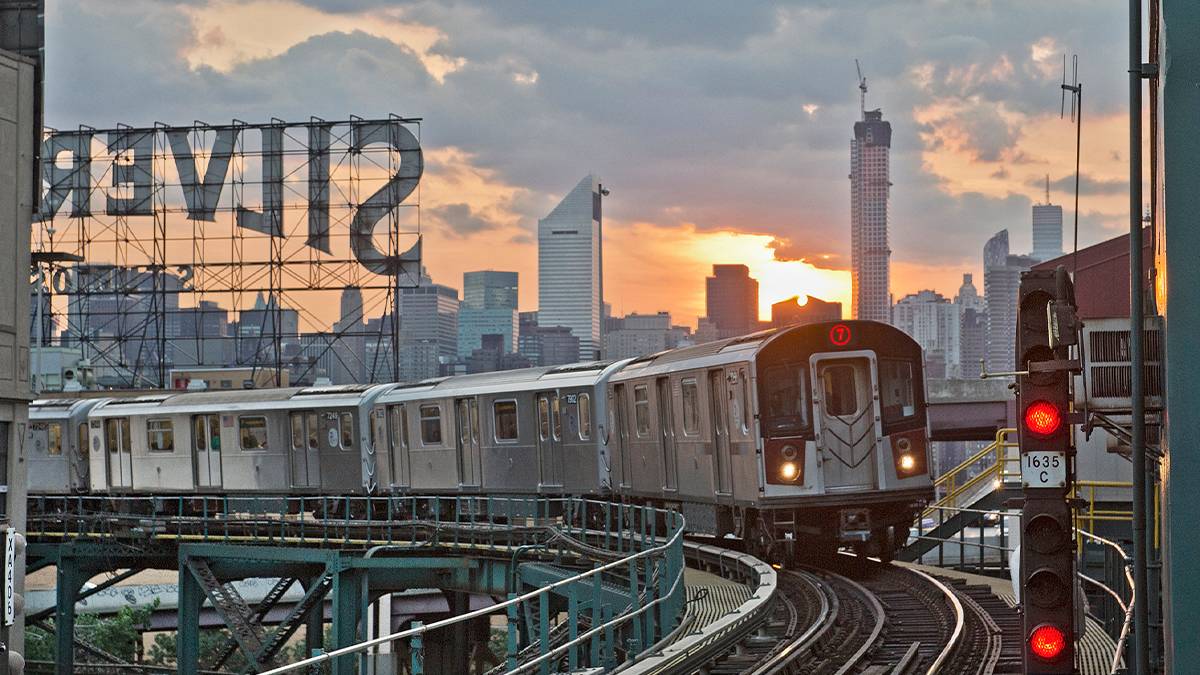


At 9:00 a.m., the school day officially begins at the iSchool. But for many students and teachers, the day actually starts hours earlier.
Across New York City and beyond, many iSchool students and staff start their days before sunrise–catching buses, trains, and sometimes even ferries to make it to class. Long commutes are pretty common in a city like New York, but the time spent traveling can still affect sleep, stress, and the balance between school and outside activities.
According to iSchool teacher Ms. Brown, who teaches about teen mental health, commuting long distances can add an extra layer of stress to students’ days and affect their sleep and overall balance.
“If you are commuting from far away, it definitely leads to a heavier mental burden and more stress,” she said.
Brown explained that the effects of commuting go beyond just getting to school. Students who spend more time traveling may have less time to participate in after-school activities, which can help them relax, socialize, and manage stress.
“We purposefully made our start time late at the iSchool to account for changes in teenagers’ circadian rhythms,” she said. “If people have to wake up earlier to commute, that definitely leads to a loss of sleep.”
Getting home later in the day can also result in students having less time to relax or finish their schoolwork before they go to bed.
“Getting home late definitely increases stress and leaves less time for relaxation,” Brown added.
Each student’s commute is unique, meaning their experiences can vary.
Emma, an iSchool sophomore who lives in Staten Island, travels to school by taking a combination of the bus, ferry, and subway. On days with bad weather, which have been very prominent recently, her commute can stretch to about 50 minutes.
“When the weather is bad like this, it usually takes at most 50 minutes,” she said. “The buses tend to delay.”
Because Emma’s commute relies on several different means of transportation, timing is important.
“If you miss your bus, that means you have to get the next ferry,” she said. “If I were to get the 8:30, I’d be 10 minutes late to school.”
Cutting it that close to being late can be stressful.
Despite the tight schedule, Emma says her commute does not significantly interfere with her schoolwork. She explained that having a routine after school helps her stay organized and manage her responsibilities.
“When I get home, I usually give myself like 30 minutes just to relax after school,” she said. “Then if I have any work to do, I’ll just do it.”
However, commuting can still make other parts of life outside of school more difficult. Because many of her friends live in Manhattan, meeting up with them often requires extra planning.
“Every time we would plan a hangout, we’d have a set time,” Emma said. “But for me, I’d have to get up earlier. It’d just be a whole mission just to get to wherever.” Some teachers also experience long commutes.
Mr. Mulroy, an iSchool teacher, travels about two hours each day to get to school. His commute begins with a short drive before he boards the Metro-North train into Manhattan.
“The commute itself is long, but easy,” he said. “I mostly sleep or do work.”
Like Emma, Mulroy said that poor weather conditions can have a negative impact on his journey. During a recent storm, icy conditions made it impossible for him to leave his house.
“I was absent one day because I just could not get my car up the hill,” Mulroy said. “It was just too slippery.”
Mulroy explained that because much of his commute is spent on the train, he tries to use that time productively.
“I have tried really hard over the last few years to make it so that when I’m on the train, I’m doing stuff for school,” he said. “That way when I get home, I don’t have to worry about schoolwork.”
However, long commutes can still take a toll on students and staff. Whether it is waking up earlier, spending hours traveling each day, or arriving home late in the evening, the added time can increase stress and reduce the amount of sleep students and teachers get. While commuting is a normal part of life in a large city like New York, the experiences of people at the iSchool show that the daily journey to school can quietly shape students’ and teachers’ stress, sleep, and overall balance.