

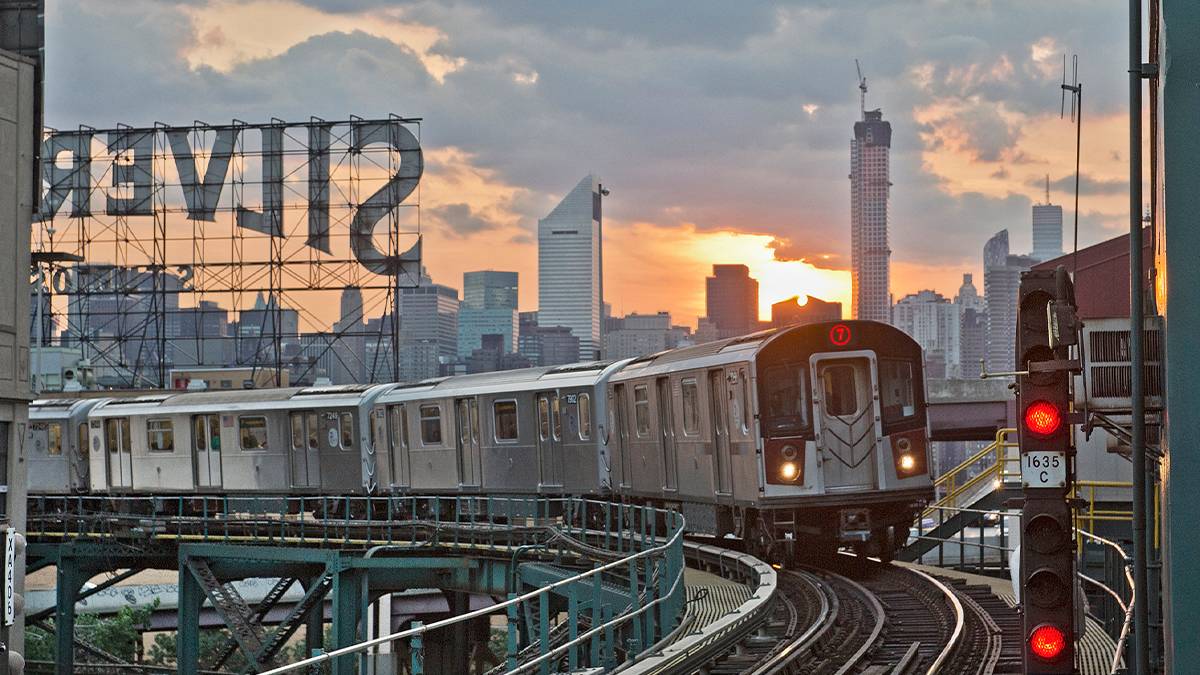
You wake up early in the morning; everything is still dark and gray. You get ready for school: finish homework, pack your backpack, and so on. Finally when you come out, the MTA app shows that the train will be at 18th Avenue in 8 minutes, but by the time you arrive it has already departed.
Then, you will have to wait about the same time for the next train to come, and the school starts soon.
New York subway system has countless issues with simply the way it operates. There are just too many problems to point out: the logistics which cause delays; its safety, for both passengers use it and train operators, it’s best seen on lines running outside the center of the city; the dirtiness and problems with cleaning, and countless other concerns.
The system is outdated, has many flaws, and still has significant room for improvement, especially when compared to more modern systems throughout the world.
After all, you still end up late to school. This is the reality for many students who have to use public transportation, especially in New York City. Most students, and even some educators, face situations like this almost everyday. Christopher Martinez for example, has to spend “80 minutes” of his day on the road. Not only that but many face other issues both logistical and non-logistical -including high crime rate, mass overcrowding, and the aging infrastructure.
Chris has to face all of these problems on his way: “So of course like when I go home, like coming back I’m going to go to school, there’s going to be some bad person on the train going crazy and then you have to go watch out, or, even if it’s crowded you have to make sure for me I always make sure nobody gets hit.”
This quote demonstrates that many students have to confront these challenges when using metropolitan railways every day.
Chris is not an isolated case to prove my point. Another student named Peter states, “The train often stops in between the stations and stays there for 5-10 minutes. Not like I hate it, but it’s also a bit dirty.” This shows that Chris is not alone, and this is a common problem for many students, educators, and others using the metropolitan railway. He also points out another issue that the subway has: “I can add that the delays are pretty bad.” This proves that the subway system has many other flaws beyond those that Chris mentioned, and they are not universal; they differ from person to person, because someone else might face a more significant issue than that.
Mr. Mei, a teacher at NYC iSchool, also points out that “It’s very bothersome to take the train, because of the delays, and the schedules are not reliable. You might have a train that says it will be in 10 minutes, but it arrives in 13, or earlier”.
This shows that it is not only students who are affected by the quality of the metro system, but also the educators, as well as the other three and a half million people who use the system daily. It significantly impacts the schools, and especially the advisers, deans, and principals who try their best to help students in need. It affects everyone in the city; the difference lies in whether the impact is direct or collateral.
The situation with the metro system actually accurately reflects many other problems that the city is enduring today in various fields.
The problems with public transportation are crucial in order for the entire city to function normally. Over three million people use it daily, and it serves as one of the most important logistical points in the city, accounting for about 40-50% of the city population that uses metropolitan railway each day. This means it’s vital to keep the subway system stable and in a good condition, and that is where the issues arise. The MTA has to choose between maintaining stable lines and updating them, as both are impossible. The fact that it has run 24/7, 365 days a year, for most of its existence indicates that they have chosen the first option.
There are many correlations between academically stronger students and greater commute times, although numerous studies support the notion that students tend to show better results when their commute times are shorter, and that time on the road significantly affects scholars’ mental and physical health. One source states, “Another analysis of bus-riding students in New York City found that absenteeism and test scores were worse for students exercising school choice with commutes of over 45 minutes compared to their peers with shorter commutes.” This demonstrates that the commute times can greatly impact students’ academic performance and their attendance.
Moreover, the city could have lost as much as $388,950,683 from train delays and other problems within the metropolitan system. The research conducted by the “New York Comptroller” reports this figure, which is an annual report for 2017. That might seem like just numbers and for some even relatively small. When compared to social spending or other programs the city sponsors it seems like a minor part of the budget.
However, when we break that amount means that the delays cost about half a year of school lunches for students according to NYS Educational Department, or about a stadium of higher education students scholarships in a CUNY College. This is not much but could change life for thousands of people which is still a huge number, we sometimes forget about the value of each human, and these 55,000 is a huge number. That is the problem with big numbers, they depersonalize the problem.
The metropolitan system undeniably has many flaws and problems to it, but also brings many benefits to everyone living in the city and especially students. The problem is that sometimes it can decide the outcome of people’s lives, and when we look at the numbers we often depersonalize them and do not understand the meaning and importance that it could have.