
The screen flickers, a reminder of the 8 gigabytes of RAM struggling to keep up with render of a scene in Blender. For most students, today it’s not just a technical glitch, but rather a brick wall they have to face everyday, that is standing between creativity and the deadline of the project.
It creates a big problem for both educators and students. For teachers, it’s lowering their expectations, sometimes expanding due dates, and creates many other problems. For students ,it limits their ability to create and inputs many other problems for them as well.
As the educational institutions push for standardized software like Blender, products from Adobe, or even FL Studio or some other classical DAWs, the hardware that is being provided, for many, still continues to remain a bottleneck for the students. This gap is not just a small nuance, but an issue in equity between students, where those who can afford to have better technology will have many advantages over others.
One student who asked to remain anonymous, described losing three hours of work because his system crashed during the final export. This happened in Blender when he was doing a scene that was pretty hard to render, and there were many objects with many modifiers that made it even worse. He describes it as like you just got to “pray” that it will work. This is just one story but it already shows the way it looks for many students, whether or not it’s a personal or a school project.
Another story that shows how things are for students due to this problem was told from the perspective of my friend, who also asked to remain anonymous. He told me about how he lost a beat he made in FL Studio, a DAW, and lost a few hours of work. Luckily many programs today have backups and everything but he still wasn’t able to return it. Not that big of a loss, but it happens pretty often and not only do you lose your work, but it also ruins your mood and any desire to do anything. This problem is not only because of how costly the technology is today, but also because many developers don’t optimize their programs, plugins, and other. Plugins like “Serum 2” are extremely unoptimized, and adding even two of them on different tracks can make FL Studio crash. Not only are they unoptimized, but are also hard to be accessed because of their cost, for most producers pirating is the only way they can get something. Some plugins can usually cost between $50 up to $500, which is, for simply a hobby is a huge price, when many don’t even know if they want to continue to do this.
Rising prices on RAM have also been a huge issue to game developers and people that are interested in this field, or even simply videogames. Many of the engines, like “Unreal Engine 5” are extremely unoptimized and they make all games look similar, because of good graphics, technologies in UE5 like Lumen and Nanite are the reason for that.
All these problems can be summed up in one, the best name for that could be something like “Lazy Optimization”. Many developers, instead of caring about optimization, just hope that you are going to have a computer with high end components like RTX 4090. Students, due to this, are being limited significantly, because to simply to even begin to do something, sometimes, you might need a PC that could need some unthinkable budgets, even though it does offer many opportunities. Already, previously mentioned examples are how the horrible optimization of Unreal Engine affected one person, or some unoptimized VST3 plugins, Blender, most likely, does not apply to this because it’s developers really do care about optimization, and mostly it’s your responsibility to do everything competent and simplify the object. It’s really a hard job to do this, to optimize objects, you need to know topology and many other skills for this, but it’s another story.
Equally important, is the idea of psychological impact, more specifically creative burnout. Just imagine how exhausting it is to lose something you’ve been working on for a pretty long time, anyone with some emotions would probably be upset. This is important because, because of this, students, or to generalize people, are simply afraid to even press a button for the project not to crush, yes, you can save the project, but it can just crush from adding just one wrong modifier.
I had a friend that was really interested in Blender, which is 3D modeling, gamedev, and some other fields that require many resources. He simply couldn’t do most of the projects he wanted, and this creates a big equity problem. Someone with more resources simply could just buy themself high end components and do everything they want. Although it does create equity problems, that’s how most talented people grow because they learn how to work with limited resources and still enjoy that. It’s a problem in some way, but there’ve always been things like this, and it cannot be fixed.
There isn’t much research on how the issue of outdated technology and growing prices, which limit the ability to upgrade, affect education in schools. Although if we look at something that requires more resources and where you learn more complex topics, higher education, we can see how many experts, and even people point out this problem.
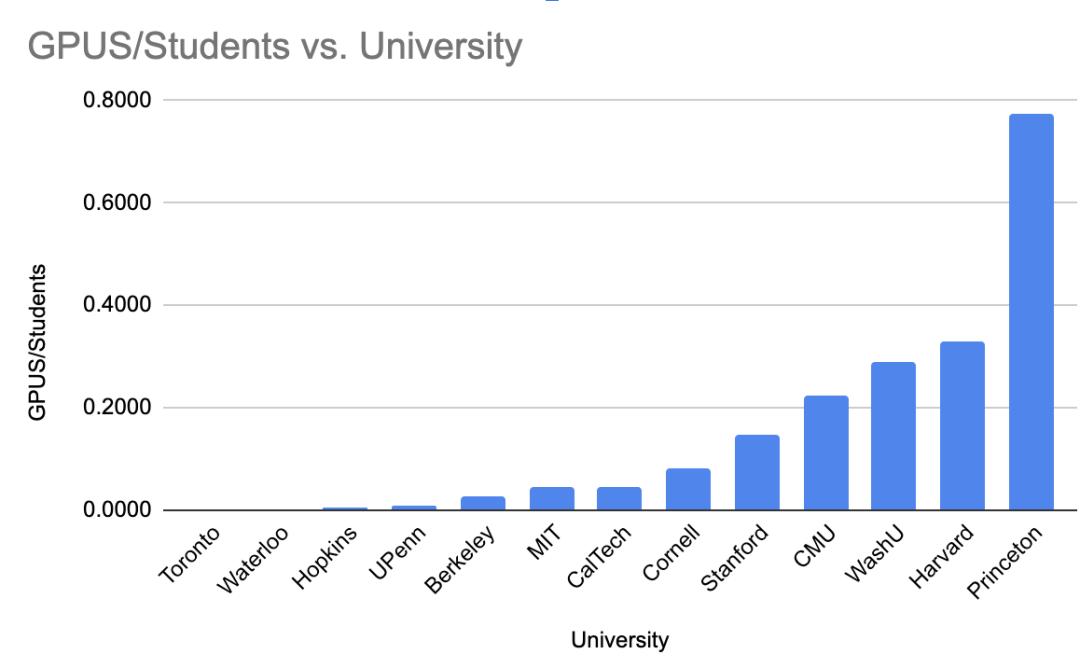
According to a report by 36kr state that many, even prestigious higher educational faculties have big deficits of computing power, that had been “slaughtered”. This has a huge impact on education, where, in some programs, there are mandatory courses that require having higher end computers. The same source also writes that Stanford has “approximately 0.1 GPU per person”. For such a prestigious award it is a really bad scale. To point out, it’s an international problem that is present in other countries outside of the U.S., many experts point out the similar problem present in China and other countries.
We are teaching the skills of tomorrow on the machines of yesterday. It’s a big problem in education, and until the hardware matches the ambitions of the curriculum, not much will happen, since it’s only on paper. This is a systematic problem which is also present in education and its technological field. This can lead to experts being under qualified in the future.