
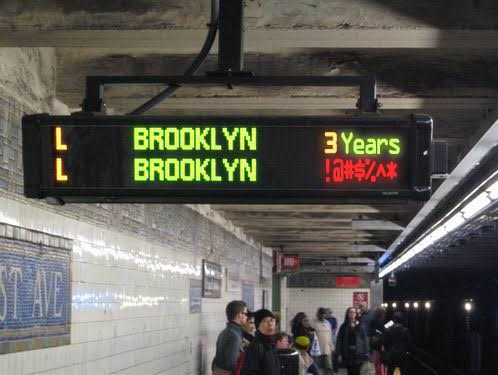
 I left home one day that seemed like it was going to be perfect until I got to the subway and saw that it said the next train was coming in 7 minutes. I knew that if that happened I was going to be very late for school, and I saw that most trains were going to be delayed and have problems for the next few weeks. I realized that if I don’t hurry up, I’ll be late for school. Suddenly, the train stops in the middle of the tunnel between two stops, and I thought,
“Oh, it’ll be fixed in a few minutes.”
Those minutes turned into half an hour, and that half hour turned into almost an hour. After all that time, I realized that I’m going to be late for school, and that will have consequences, like not being allowed outside for lunch.
Trains are often delayed, overcrowded, or in poor condition, causing students and workers to arrive late. The transit system, operated by the Metropolitan Transportation Authority MTA, needs improvements, such as more maintenance, more staff, and better communication between trains. Passenger experiences also demonstrate that these problems affect many people every day, and that it is important to address them to improve the quality of life in the city.
According to a news report, State Comptroller Thomas P. DiNapoli said, “As the MTA prioritizes work in its capital program and brings back riders, it’s important to understand where and how subway service is being disrupted and delayed,” Also DiNapoli said. “Targeting problem areas like signals and issues with subway cars that add to delays can improve straphangers’ experience and boost ridership. This shows us the conditions of the trains in New York, causing problems over time with the operation of the trains, mainly those of the MTA. The fact that problems with subway cars are the leading cause of serious incidents under scores the need for improvements to subway rolling stock.
Punctuality varies considerably across the 21 subway lines monitored by the MTA. Four of them exceeded 87% on-time performance last year, with the L train leading the way at 91.9%. This shows us the conditions of the trains in New York, causing problems over time with the operation of the trains, mainly those of the MTA.
How do these events affect people in New York?
Mr. Mei, an iSchool teacher, describes his opinion about the conditions of the trains in New York and he shared how important the train is for him.
Mr. Mei said, “I think it’s not the best, for example the d train has more delays than other trains, half of the week it’s delayed.”  And also said, “Sometimes I look in other countries with subway services and they don’t have too many problems with the subway day by day.” This demonstrates how the trains have an important effect on everyone in New York city but sometimes they look at the subway from other countries and realize that the state of the trains is completely different from that of New York.
How do train conditions affect people on a daily basis?
Valery Sanchez, iSchool student, affirms and describes the bad experience she had on his way to iSchool.
Valery said, “Once, I got on a train that was very crowded. There was a homeless man who smelled awful. I also have claustrophobia, and when there are too many trains, I need to get off and take another one. Once, I had to get off a train to catch another because the one I was on was on was too crowded, and when there are too many people, I feel suffocated and can have panic attacks, so I prefer to get off and take another train.” This demonstrates how some people have bad experiences when they go to work or school.

What are your thoughts on these issues regarding the conditions, and what do you suggest to try to change this problem?
The MTA should change or fix these conditions to prevent further problems for passengers or the closure of some train lines in New York.
I suggest the MTA should improve communication between trains and implement a new system to prevent delays. I also think they should fix the train tunnels to prevent trains from having to take an unsuitable route to reach the next station, but that would require hiring more staff to maintain better control. Dayron Cruz, iSchool student, describes the situation inside the trains. Dayron said, “In general, the bad smell on trains, especially in winter, starts locally and then becomes excessively strong, making it a problem.” This supports the idea that conditions inside trains are not very hygienic for the people who ride them every day and shows how the MTA should fix that.
Also said, “Installing air fresheners to create a more pleasant atmosphere in the tra in cars and improve passenger conditions, such as reducing overcrowding or running more frequent trains on the route, could be beneficial.” This demonstrates how the MTA can more economically benefit the company by fixing routes, delays, or cleaning inside the trains. Other evidence can support this is Mr mei argument about making more workers for the MTA and Give more maintenance to everything. Mr. Mei said “Have more workers in the MTA, and put more money into renewing the systems of the trains… A lot of people take trains in the city and I think we have the best service because like 9 million people take trains.I don’t think they take out the trains in the whole city or some parts of the city.” This demonstrates how the fact that problems with subway cars are the leading cause of serious incidents highlights the need for improvements to subway rolling stock.
As socialization and interaction among people continue to increase, certain problems that might have previously gone unnoticed also become more visible and frequent. In particular, during work and school days, when millions of people commute daily to their workplaces or schools, any difficulties with transportation systems tend to be amplified.
For example, many workers and students rely on trains and other forms of public transportation to arrive at their destinations on time. When delays, cancellations, or service disruptions occur, these situations don’t just affect a small group of users but can impact large numbers of people simultaneously.
If these problems are not addressed through infrastructure improvements, more efficient urban planning, or investments in more modern and reliable transportation systems, the impact is likely to continue growing. This could translate into higher stress levels among commuters, lost productive time, and an overall decline in the quality of life in New York City.