

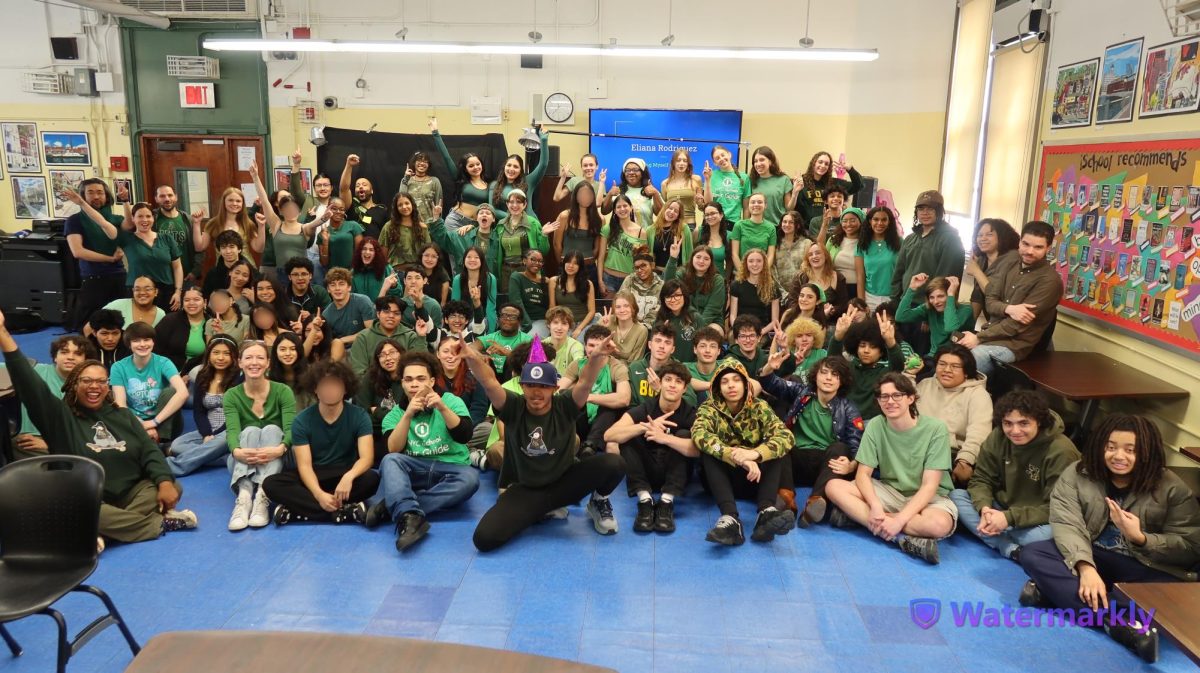
You walk into the halls and see students wearing pajamas. Or carrying their items in other containers instead of backpacks. Or dressing like it’s 2016. Or wearing matching colors for each grade. Or even twinning with each other.
This is Spirit Week, a yearly event with different themed days that helps bring students together and build community at the iSchool.
First of all, does Spirit Week have any impact on the iSchool community? Members of iCare, a club at the iSchool that promotes schoolwide events and charity work, seem to think so. Kio Sou, a senior at the iSchool and a member of iCare, says, “it lifts up school spirit and brings people together”. Oliver Jacoby, another senior and iCare member, says, “we see a lot of … people making connections”.
But what do sources outside of the iSchool have to say about school spirit weeks in general? Well, they also have positive things to say. According to Business Insider, “inclusive, welcoming school spirit days can bring much-needed fun, joy, and levity to everyday life.”
Spirit weeks can also help students build up their confidence. According to Medium, “As more people get involved in spirit weeks, students will develop more confidence in wearing what they want to, and feeling good about themselves for doing so.”
Therefore, sources inside and outside of the iSchool agree that Spirit Week has an overall positive impact on students.
Spirit Week’s been a part of the iSchool for a while, but when exactly did it start? According to Ms. Colon, the founder and advisor of iCare and a guidance counselor here at the iSchool, “when I first got here, in 2011, [Spirit Week] was part of Student Council”. Then when iCare was formed, Spirit Week continued, so it has been a part of the iSchool for a long time.
Participation can make a big difference in what events like Spirit Week look like. But what influences participation? Oliver says that he participates to try to get others to join in, while Kio says, “I like dressing up and it’s just fun to do with friends.”
Unfortunately, there have recently been low rates of participation in Spirit Week. Ms. Colon says that she doesn’t usually see more than half of the students participating. Oliver also says, “we don’t see as many participants versus other events [at the iSchool]”.
So why don’t more people participate? Ms. Colon has a theory. She says, “I definitely think that freshmen, in my observation, get really excited about, but it if on the first day, they don’t see that the upper classmen are doing it, then they tend to get weary and don’t want to do it, so a lot is predicated on the upper classmen getting involved.” In addition, Kio says that sometimes, “freshmen are scared to dress up because they think it’s not cool enough.”
Next, let’s take a look at participation through each day of Spirit Week: Pajama Day, Anything But a Backpack, This is 2016!, Color Wars, and Twin Day.
On Pajama Day, we saw a fair amount of participation, about half of the students. Almost all of the teachers, however, showed their school spirit by dressing in pajamas. Ms. Colon mentioned, “I will tell you Pajama Day definitely gets the most [participation]”, which is likely because it’s one of the easier days, and many students enjoy coming to school comfy.
On Anything but a Backpack Day, we didn’t see as much participation. Some students brought other bags, like tote bags, and some students already used bags other than backpacks on a daily basis. However, since many students take the train to school, bringing your things in carriers other than backpacks can be difficult. Ms. Colon mentioned that spirit days like this one are often more common in non urban schools, where the majority of students are driven to school.
On This is 2016! Day, there were not very many students participating, possibly because they didn’t know how to dress like it’s 2016, or because they didn’t have the right kind of clothes. The teachers, like they were for the rest of the week, were participating by wearing their 2016 clothes.
Color Wars is certainly the most competitive day during Spirit Week. On Color Wars, there were a lot of seniors and juniors wearing their colors, as well as some sophomores, but not many freshmen. Teachers participated by wearing the colors for their advisory grade.
On Twin Day, there were some students twinning, although it was difficult to tell because some students were in different classes than their “twins”, and you couldn’t tell that they were matching. Many of the teachers had matching outfits as well.
As you can see, we didn’t see as much participation this year as we could have. But how would we get more students to participate? One trend common with participation in spirit weeks across many schools is a decrease in participation throughout the week, as students get bored. According to Education Week, a way to prevent this is, “Instead of having a ‘spirit week,’ schools could have five ‘spirit days’ scattered throughout the year.” This is an interesting idea that the iSchool could consider going forward, although it may be more difficult to plan out and make students aware of.
In recent years, a survey has been sent out to students so that they can have a say in the themes of each day of Spirit Week. However, the results aren’t perfect. Ms. Colon, Kio, and Oliver all agree that many students don’t do the survey, so the actual days don’t reflect the entire student body, with some students disliking the themes selected. Kio says, “a lot of students don’t do it or miss it so we don’t get a really good look at what people want and when the days do come out people often do disagree with it.”
Overall, school spirit weeks help bring students together, and have a positive impact on the school community. Student participation can have a big impact on these events, so if you didn’t participate this year, consider trying to get involved in at least one day next year, if you’re able to.